If you only know Málaga in summer, you have never seen the city at its most itself. For one week a year, the week before Easter, everything stops for Semana Santa: Holy Week. It is not an attraction invented for visitors; it is a tradition handed down for more than five centuries, from grandfather to grandson, from neighbourhood to neighbourhood.
In short: Semana Santa is Spain's Holy Week, running from Palm Sunday to Easter Sunday. Brotherhoods known as cofradías carry monumental thrones bearing figures of Christ and the Virgin through the city, escorted by nazarenos in pointed hoods, brass bands and clouds of incense. Málaga hosts one of the largest celebrations in Spain, with over forty processions in eight days. The next edition runs from 21 to 28 March 2027.
What exactly is Semana Santa?
Semana Santa literally means Holy Week: the final week of Lent, from Domingo de Ramos (Palm Sunday) to Easter Sunday. Processions fill the streets across Spain that week, but nowhere on the scale of Andalusia. Each procession is organised by a cofradía, a brotherhood often centuries old that spends the entire year preparing for these few hours.
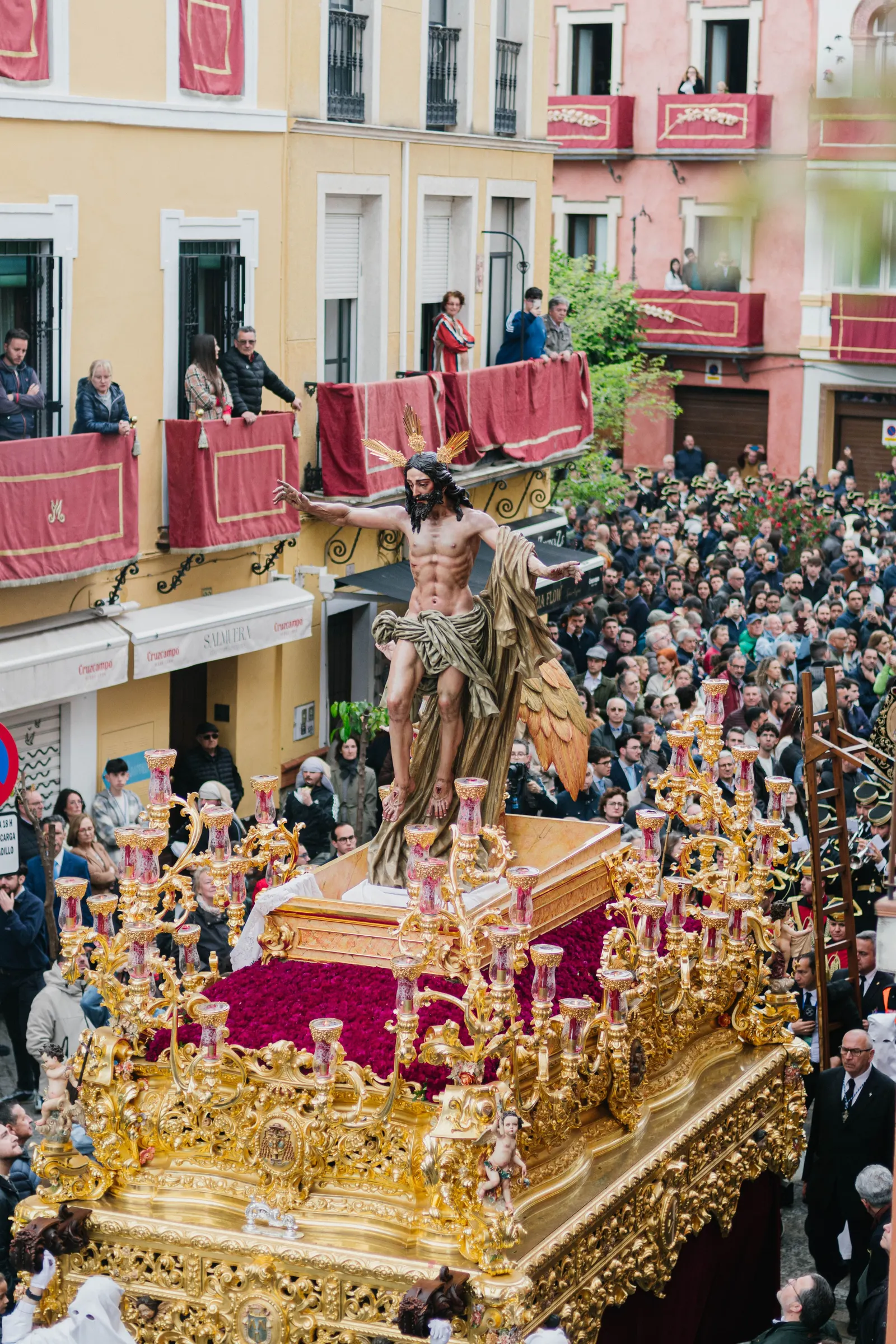
At the heart of every procession is the throne (trono in Málaga, paso in Seville): an ornate platform carrying a sculpted Christ or Virgin, covered in gold embroidery, flowers and hundreds of candles. Málaga's largest tronos weigh over five tonnes and are carried by more than two hundred bearers at once. When one of them sways down a narrow street to the rhythm of a marching band, you understand why even non-religious Malagueños get goosebumps.
Nazarenos: the pointed hoods that surprise every first-time visitor
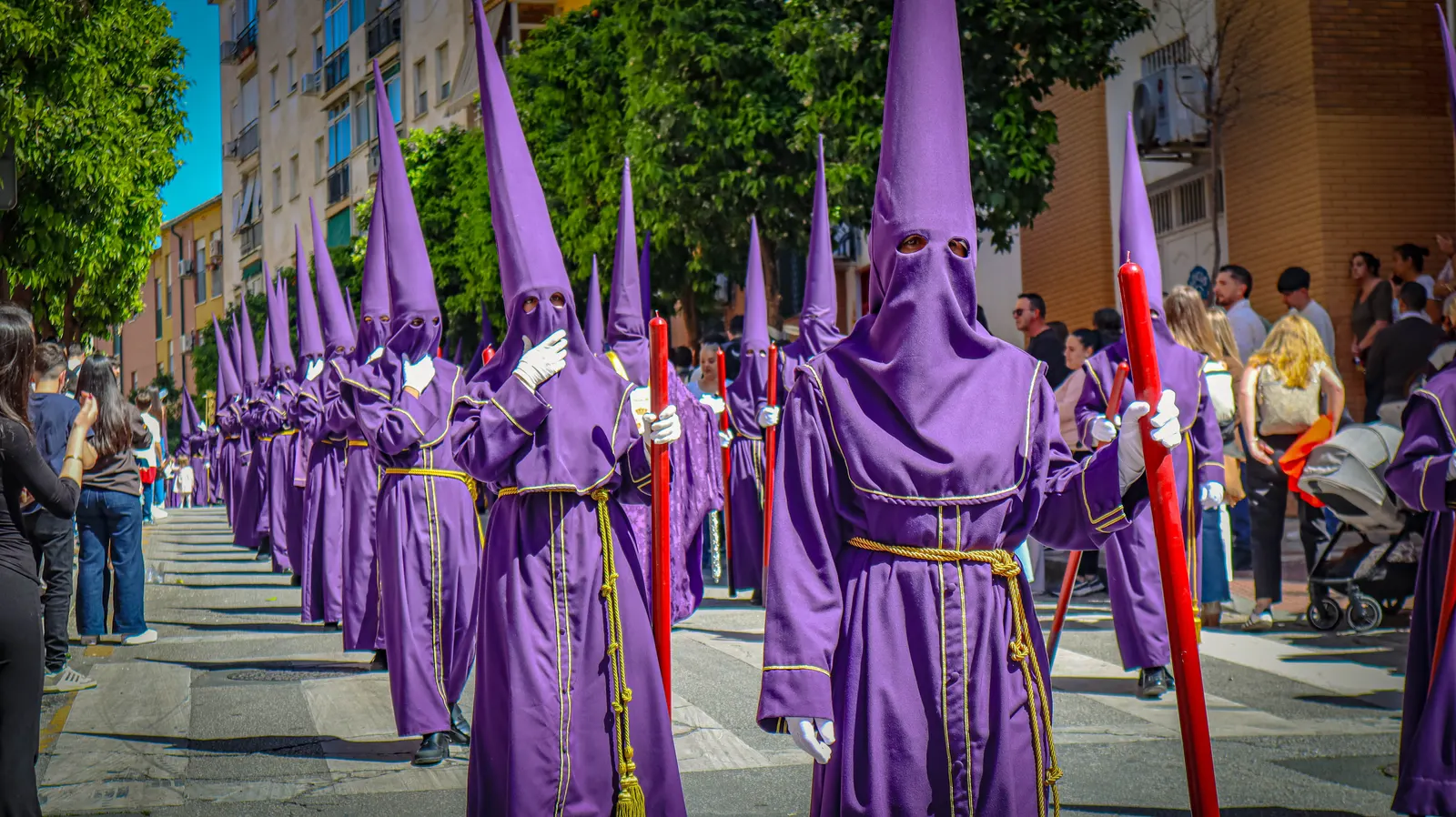
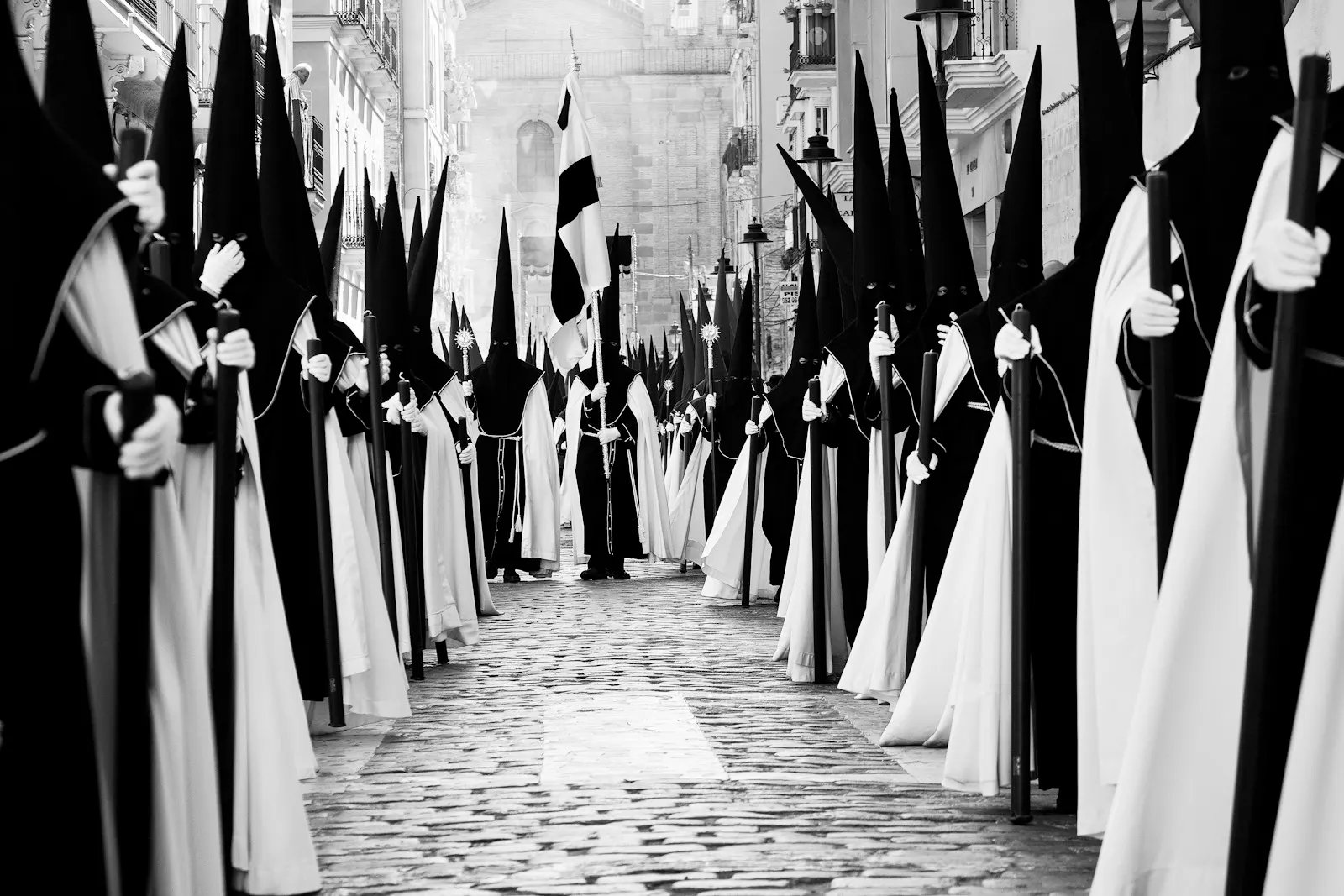
The image visitors remember most: hundreds of figures in long robes and tall pointed hoods, the capirotes. Unfamiliar at first sight, but the tradition is centuries older than any modern association: the hood hides the face of the penitent so that penance can be done anonymously. Every brotherhood has its own colours: purple, white, black, crimson, green. Between the nazarenos walk penitents carrying crosses, altar boys swinging incense, and women in the mantilla, the traditional black lace veil.
Then there is the sound. Muffled drums, shrill cornets, and now and then, when a throne pauses, a saeta: a raw flamenco lament sung from a balcony into the night while the whole street holds its breath.
Why Málaga beats Seville for a first visit
Seville has the most famous Semana Santa; Málaga has the most welcoming one. The mood is less solemn and more exuberant: here people applaud and cheer as a trono passes. The thrones are bigger (carried on the outside, not hidden underneath as in Seville), the streets are wider, and you do not need a grandstand ticket to see everything.
Two moments are world famous. On Holy Thursday the Spanish Legion disembarks in the port and carries the Cristo de Mena into the city while singing its anthem, a ceremony that draws tens of thousands. And El Cautivo, "the Lord of Málaga", brings the biggest crowds of the week on Monday. Málaga-born actor Antonio Banderas has walked with his own brotherhood for decades; that is how deep this week runs in the city.
When is Semana Santa? (2027 dates)
Semana Santa falls in the week before Easter, so the dates move: late March or early April. The next edition in Málaga runs from Sunday 21 March to Sunday 28 March 2027, which lines up neatly with the UK Easter school holidays. Processions typically start in the late afternoon and continue deep into the night; Holy Thursday, with the Legion and the great brotherhoods, is the one day not to miss.
Practical tips:
- Best free viewing spots: the Alameda Principal and the streets around the cathedral; arrive an hour early for a front-row position.
- Book early: city-centre hotels fill up months ahead at peak prices. If you own a place on the coast, this is one of the weeks it pays for itself (the guides show how peak weeks feed your rental return).
- Take your time: a procession does not hurry. Plan one or two per evening and enjoy a drink on a terrace in between; this is an experience, not a sight.
- With children: nazarenos hand out sweets and wax droplets to children who bring a ball of foil to collect them on; a tradition in its own right.
What this week tells you about living in Málaga
Why does a property fixer write about processions? Because Semana Santa shows exactly why Málaga is more than a holiday destination. This is a city with a life of its own and a calendar that never stops: after Holy Week comes the Feria de Málaga in August, a full week of music, horses and casetas. If you are thinking about buying on the Costa del Sol or spending the winters here, you are not just buying sunshine; you are buying into a city that never switches off.
For owners there is a financial angle too: Semana Santa is one of the strongest rental weeks of the year outside summer, with nightly rates approaching high-season levels.
Want to feel what Málaga is like beyond the beach season? Plan your viewing trip for March instead of July. I am happy to spend an afternoon walking the city with you, and if you want to know what your budget buys here, start with the free scan: four questions, an instant personal shortlist.